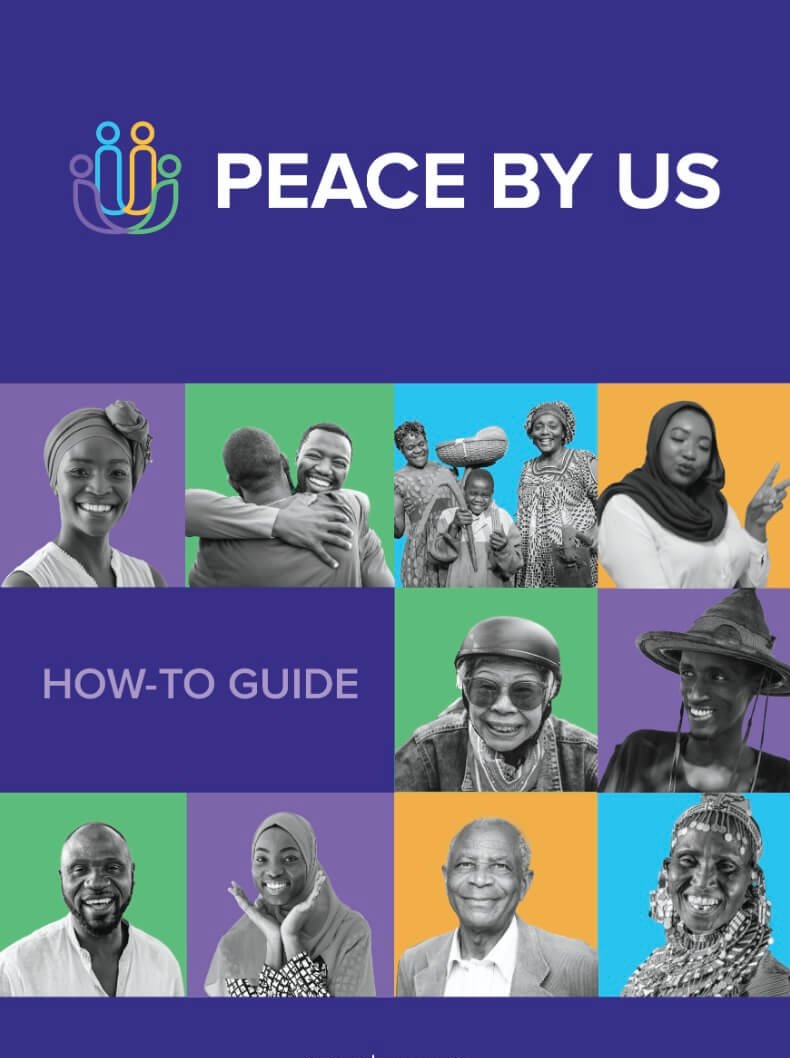
Peace By Us is a locally-rooted peacebuilding model we developed and tested in partnership with four Nigerian partner organizations through our Protecting Our Communities Initiative in 2019-2024. The approach generated systemic change at local, state and national levels by facilitating connections among communities, civil society networks, security agencies, and government institutions. Key to the model’s success are its strategies to integrate constituencies not typically engaged in security processes.
We’ve experienced relative peace between cattle rearers and farmers… Communal clashes have also reduced. Anytime there’s an attempt to cause a communal clash, there’s always someone to calm the situation.
A youth member of a local Early Warning-Early Response Committee
THE MODEL:
EMPOWERING COMMUNITIES
Community Peace Committees made up of a broad cross-section of community members collect reports of early warning signs via formal and informal community reporting systems—and coordinate responses:
- Dialogues, peer-led by Community Dialogue Facilitators, develop mutual understanding and common ground between groups in conflict
- Media Strategies—call-in radio programs and social media are used to lift up positive stories, and dispel dangerous rumors
- Problem-Solving brings stakeholders together to develop action plans to address community issues
- Mental Health and Psychosocial Support, led by peer lay counselors, helps people heal from the trauma of violent conflict and help rebuild community life
- Advocacy and Outreach to traditional leaders, government, and security officials integrates support for the solutions identified by
community systems
THE IMPACT:
REDUCED VIOLENCE, STRONGER COMMUNITIES
Insights from 2019-2024 evaluations:
- In areas disrupted by violence, new processes and systems for addressing conflict effectively are now embedded in communities. People can improve their own security
- An independent evaluation found increased feelings of safety and reduced fighting and violence. The sense of peace allowed people to return to farming and working
- Relationships between groups (such as Christians and Muslims) improved. Farmers and herders even developed joint advocacy platforms at the state level, based in mutual understanding
- Community-run peacebuilding processes have addressed more than 1020 incidents to date that could have sparked broader violence. Former hot spots have been able to avert political violence
- Participants created Early Warning-Early Response (EWER) committees at the local government level and fostered collaboration with state-level EWER structures